Look before setting a destination
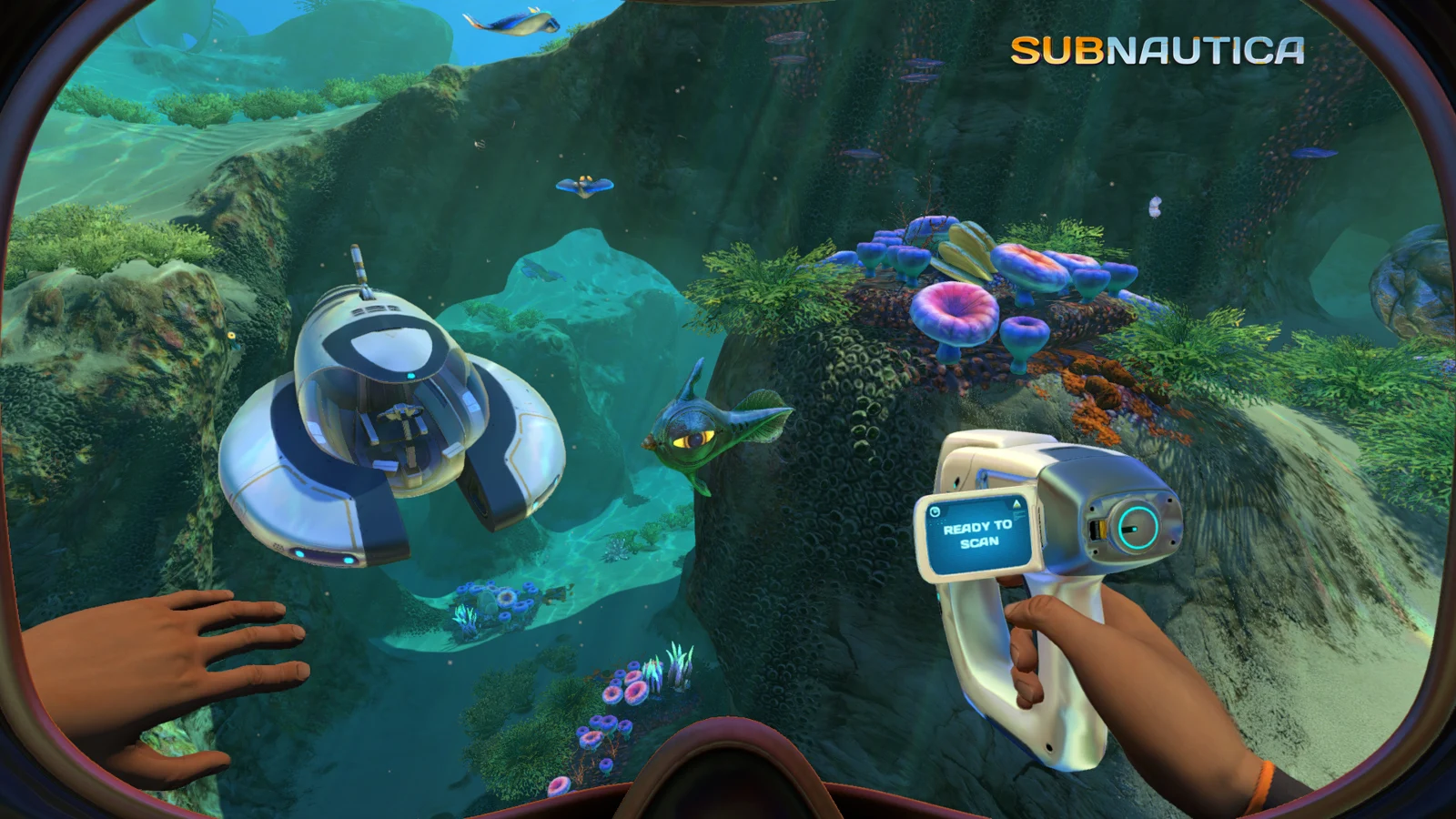
Subnautica introduces its ocean through proximity. The water near the lifepod gives you a place to practise looking, gathering and returning before a larger ambition starts pulling the route away. Spend a first survey noticing the seabed's shapes and the relationship between the surface and the place you started. The neighbourhood becomes useful when it is more than an anonymous patch of blue.
Choose one direction and keep the first loop modest. You are not trying to empty the area of resources. You are learning how the same ground looks from different positions. A rock formation that seems obvious while swimming away may be less recognisable when you turn around, and that is a useful discovery in itself.
Keep a route to air in the picture
Oxygen is part of the route, not a separate warning to acknowledge at the end. Check it while the surroundings still feel straightforward. The next interesting object may lie below a ledge or inside a small opening, and that changes the return from a simple upward swim into something you need to understand spatially.
On an early survey, prefer an unobstructed route back to the surface over a long chain of little detours. Learning where you can breathe comfortably gives later exploration a reference. A tank upgrade can extend your options, but the useful skill is already available: notice when a route has become more involved than the one you started swimming.
Collect for the tool you want
A first inventory can become a mixture of everything within reach. Give gathering a practical purpose by reading a tool recipe and identifying the immediate materials it needs. The scanner is especially relevant to a curious expedition because it turns nearby life and technology into things you can investigate more closely.
Keep some space for an unexpected discovery, but do not let a full bag stand in for a plan. If you have enough for the intended tool, returning to make it can be more useful than extending the same swim until every slot is occupied. The next outing will then begin with a new way to interact with the world you have just surveyed.
Give landmarks an ordinary description
You do not need a detailed external map to begin remembering the shallows. Describe a feature in language that makes sense to you: a broad shelf, a patch of tall plants, a split in the rock. Then connect that feature with your direction of travel and the lifepod. The description helps you distinguish a place from the item you happened to collect there.
If two areas look similar, note the difference you actually used to recognise them. This is more useful than assuming the confusion will disappear by itself. As the ocean grows more familiar, small visual relationships become part of your own navigation, and the first neighbourhood retains meaning even when later equipment allows much longer excursions.
Return with a question as well as materials
At the lifepod, put the haul into a useful order and choose one thing you want to investigate next. It may be a scannable organism, an unfinished tool or a route whose exit you want to understand better. A short survey can be complete without explaining the whole ocean. Its success is that the nearby water now contains recognisable places and answerable questions, giving the next expedition somewhere concrete to begin.