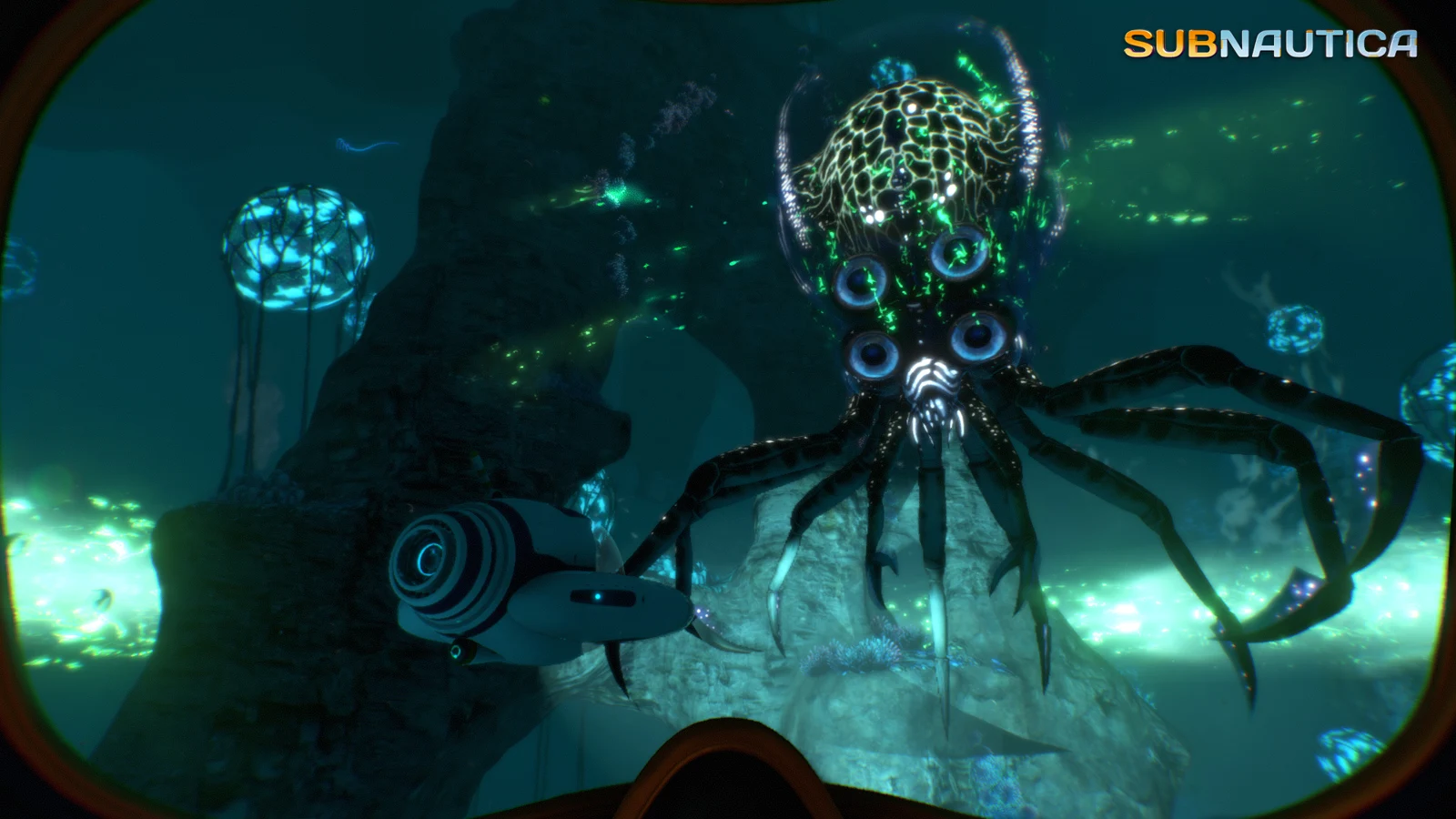
A tool for more than wreckage
The scanner connects two pleasures in Subnautica: understanding unfamiliar life and learning how technology fits together. It can investigate organisms and suitable technological objects, with findings recorded in the PDA. Approach it as a way to look more carefully, rather than simply a button used until a blueprint notification appears.
On a familiar route, hold the tool ready and notice what the game identifies as scannable. Something you previously treated as scenery may now become a subject. That shift is valuable even when no immediate crafting goal follows. The ocean begins to feel like a place with distinct forms and relationships instead of a backdrop containing supplies.
Understand the fragment’s role
A technological fragment can contribute towards a blueprint. Read the displayed progress and the relevant PDA information instead of assuming that one scan always finishes a whole unlock. The practical reward is a new possibility to investigate, but it still needs the required materials and a suitable place in your current plans.
Keep discovery and construction separate in your mind. Learning a blueprint does not oblige you to craft it immediately. Ask what capability it would add and whether that capability supports the next expedition you want to make. This gives the technology an identity within your play rather than turning every notification into another unfinished shopping list.
Give a creature more than a label
When scanning life, look at the surroundings as well as the subject. Notice where you met it, how it moved and what made it visible against the background. Those observations give the databank entry a place in your own experience. A name is easier to remember when it belongs to an encounter you can describe.
Do not pursue a scan so insistently that you stop reading oxygen, distance and the route back. You can return to an interesting organism when the situation is more comfortable. Leaving one subject for a later visit preserves curiosity; it does not make the earlier expedition incomplete. The surrounding environment is part of what you are learning.
Read at a sensible pause
A databank entry deserves a moment when reading will not compete with an awkward swim. Return to a comfortable location, open the PDA and choose a finding that caught your attention. Look for the detail that connects with what you actually saw. Reading becomes more memorable when it answers an observation instead of interrupting another task.
Avoid opening a broad story guide just because one entry raises a question. The game's own record can provide enough direction for a spoiler-light next step. You can choose to understand the tool, animal or resource in front of you without searching for the entire chain of future events that somebody else's walkthrough attaches to it.
Make the next visit more observant
Choose one difference the scan has made to your next outing. You may recognise another fragment, pay attention to a creature's surroundings or investigate a recipe that fits the route you want to take. The scanner has then done more than fill a percentage. It has changed how you look at the ocean. That is a useful form of progression for an expedition journal: the familiar water contains more meaning when you return.